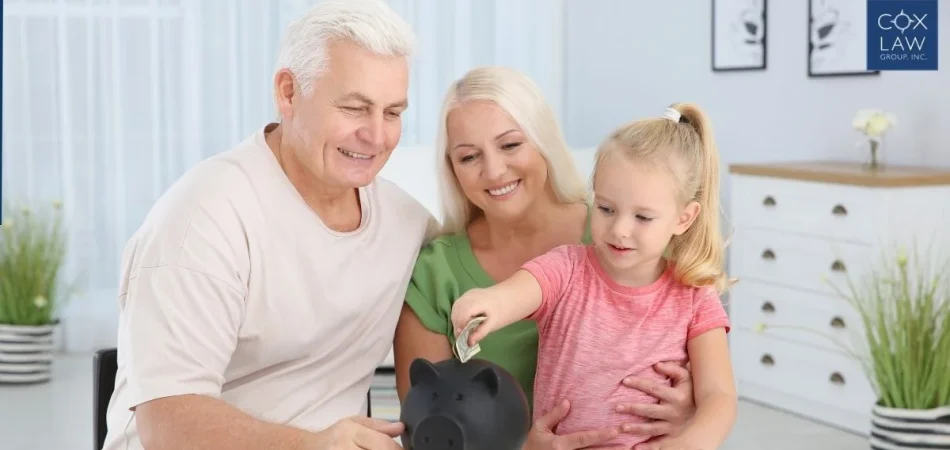
When grandparents are making their estate plans, they often want to leave funds or assets to their grandchildren to help them thrive. This can introduce additional complications for grandchildren with disabilities. While you may have many questions as a grandparent in estate planning, you may wonder what happens if a grandparent leaves money directly to a disabled grandchild in South Bay, CA.
Choosing the right estate plan is a key part of creating a plan that supports the needs of your grandchildren.
Disabilities in California are common and come in many different forms. Whether cognitive or physical, an estimated 26% of Californians over age 18 live with a disability. One of the biggest concerns for disabled grandchildren who are inheriting funds is losing access to disability benefits or other public programs. Medi-Cal and SSI have strict income limits, and an inheritance can cause a recipient to surpass these limits.
Losing these benefits can be catastrophic for a grandchild with a disability. Even with the inheritance, they might find it harder to get necessary medical care or to keep up with the costs of living as they age. Losing insurance could mean medical care becomes much more expensive, making the inheritance not last as long as you had hoped.
How you approach your estate planning can affect whether your disabled grandchild might lose access to benefits because of an inheritance. If you’re one of the two-thirds of adults in their 70s who have an estate plan, it’s important to tailor it to the specifics of your family.
Special Needs Trusts are an option used in estate planning for disabled beneficiaries. Put simply, they allow someone to set up a trust for the care of a disabled child or family member. These trusts may have more limits than a standard revocable living trust and can also bypass eligibility requirements for some government programs.
California Probate Code 3604 also allows courts to order that an SNT be set up for a beneficiary and sets forth other guidelines for SNTs. It’s important to consider these early in estate planning. If you pass without an SNT and only a will, your estate will likely be put through probate at the Stanley Mosk Courthouse, and you will have less control over how a disabled beneficiary receives their inheritance.
There are two main types of SNTs, and each functions slightly differently:
1st-Party trusts are often counted as assets for SSI limits and can be counted against Medi-Cal as well. This type of trust may be the favorable option if a disabled grandchild receives a direct inheritance, but it could easily disqualify them from the benefits they are receiving.
In contrast, 3rd-party trusts are often not counted against SSI or Medi-Cal limits, allowing the beneficiary to retain key benefits. An independent trustee is typically named to manage the funds for the benefit of the beneficiary.
This is not a black-and-white split, and what counts can vary depending on how the trust is set up. Who manages the funds, how the beneficiary receives or uses them, and what the funds are used for are all important elements. It’s also necessary to accurately report these funds when requested, to avoid accidentally losing benefits due to inaccurate information.
Properly forming a 3rd-party trust can be the most effective way to handle an inheritance for a disabled grandchild, but it isn’t always easy to do. You will likely want to hire an estate planning lawyer to help you with the process.
For more than 30 years, the team at Cox Law Group, Inc. has helped clients answer this question and navigate estate planning in a way that considers all the complications disability brings. We have extensive experience helping clients create estate plans that consider disability. Our team advocates for disabled individuals, and we focus extensively on the complexities of SNTs.
We understand the challenges these cases bring and are passionate about helping clients through them.
One downside of a Special Needs Trust is that the beneficiary doesn’t have as much control over the funds in the trust. Another possible downside is that if the beneficiary dies, portions of the trust funds might need to be repaid according to Medicaid payback requirements. It’s important to consider all the possible pros and cons of an SNT before setting one up.
California does not impose a state inheritance tax, meaning there will not be a direct tax on inheritance from the state. However, depending on the value of your inheritance, you might be subject to federal inheritance taxes. The type of property and how it is inherited can also lead to other forms of tax, such as changes in property taxes or capital gains taxes.
Disabled grandchildren can inherit money directly if provided for in the grandparent’s will or other estate plan. This form of direct inheritance can easily change eligibility for means-based aid programs, including Medi-Cal and SSI. You should carefully consider what form of inheritance might most effectively help your grandchildren without them losing access to necessary benefits.
Some SNTs can allow beneficiaries to continue receiving public benefits, but not in all cases. How the trust is set up, who manages it, and what it is being used for can all have an effect on eligibility. Different programs might also count funds in a trust differently, meaning it may affect eligibility for some programs but not others.
Whatever your estate planning needs, Cox Law Group, Inc. is here to help you in the South Bay and throughout Los Angeles County. Contact us today for a consultation and let our team’s knowledge and experience help you create an estate plan that supports the needs of your grandchildren.







Fields Marked With An ”*” Are Required